I’ve been thinking a lot recently about whether I’ve been living authentically. Authenticity became important to me around 2013, when I realized I had a habit of minimizing myself and passively going along with others rather than expressing my own truth. The result was that I had become surrounded with mediocre friendships – connections built on convenience rather than genuine choice. After that realization, I swung in the opposite direction, becoming outspoken and perhaps a bit arrogant before eventually finding balance. But in recent years, I fear I’ve been subtly manipulated into becoming someone I didn’t consciously choose to be – a person no longer able to be alone with myself.
I started to think this when I realized I have trouble choosing to do the things I know I want to do. Instead, I easily fall back on passive and unproductive activities like watching Netflix or YouTube without any real purpose, or mindlessly messaging people on my phone. I’ve become a passive consumer – like a cow being milked, I’ve allowed myself to be harvested as a resource for some tech bro’s financial gain. What disgusts me most is that I barely even noticed it happening. My sense of agency feels diminished by the pervasiveness of technology and the internet, and by the slow reduction of life in physical spaces.
Somewhere along the way, I have been thoroughly trained to seek entertainment and avoid boredom at all costs.
If you’re not making your own world, you’re living in someone else’s.
Most people are not authentically themselves, they are more of an assemblage of all the random things they have passively consumed – the flavor-of-the-day fashion, music, movies, social media content, and trends. People move in herds, preferring to do what others do. Many deny this, claiming that everyone is unique. But this uniqueness is often simply doing things slightly different than others while still remaining within the scope of what is socially acceptable out of fear of being alone. When the herd shuns you for being different, you will be alone and confronted with the reality of who you are. In many cases we realize we are empty and don’t know who we are, resulting in a desperate urge to regain social belonging.
This dependence on validation shows how fragile people’s sense of self can be. It takes strength to go it alone and do what you want regardless of what others say or think of it. Every person needs some form of social support and belonging, but we often overlook the importance of solitude and independence. So many people complain of feeling lost these days, and I think the reason is that they have never had the space to figure out who they really are.
I noticed a trend recently among new people I meet. When going through the small talk or getting to know each other phase, I inevitably ask about what that person likes to do in their free time. To my surprise, the majority of people seem to either not know what they like or list basic things that are either essential for life (like eating or sleeping) or done so infrequently that I can’t imagine them being considered a real hobby (like traveling).
I thought for a long time how it’s possible for someone to be this way, and never came to any clear conclusions or got a satisfying answer from anyone I discussed it with. Most Taiwanese people blame it on the education system not allowing people to develop interests, but this phenomenon doesn’t seem to be only limited to Asian educational systems, and I have met plenty of Taiwanese people who have many hobbies/interests and strong critical thinking ability.
It seems to me the problem is that people spend their time unproductively, either almost constantly with others or consuming content just to fill the time. The problem with both of these is lack of purpose and curation.
I have had periods of time where I was constantly in contact with others and hanging out with people nearly every day, and the problem with that is that unless you really like and respect all of those people, then you are letting yourself be affected by people who are not the best influences. Many people talk about how they see interesting and meaningful content on social media, so they don’t want to give it up, but they don’t mention all the ads and other random suggested posts that also pop up. Imagine two scenarios:
- You spend all your free time one week watching trash TV and at one point end up stumbling upon an interesting and insightful documentary, watch it, and then go back to your usual programming.
- You spend your week quietly, doing nothing in particular, and then watch that same insightful documentary.
These are just hypothetical scenarios, but I’d bet that in the first scenario, the insights you gained from that documentary would quickly fade – drowned out by all the noise from everything else you consumed.
So how do we curate our lives? In my last post I described the mind as a puddle: murky when agitated and clear when at rest. When we are constantly being pulled in many directions by advertisements, other people’s opinions, or new trends, the mind never has a chance to settle into stillness. The curation process involves figuring out what and who you actually like, but this is only possible when you give yourself the space to be alone and notice what you actually feel.
In the weeks following my last post, I was much more intentional about who and what I spent my time on, trying to focus on people and things that matter instead of just distracting myself. However, the reality was that I had little desire to see anyone and preferred doing things alone whenever possible. This was partly because I realized how many interests I’d been neglecting in favor of constant socializing. I did spend time with a few people during those weeks, but I did not have any constant feeling of wanting to socialize as I had before. I also joined a language exchange gathering, but after several hours of small talk, I realized it was mostly a waste of time – time that would have been better spent alone.
Besides this recent freedom from the need to socialize that I have been enjoying, I have also started communicating primarily through email. This change has been enjoyable because it encourages deeper and more thorough communication than through text message, and also frees up a lot of time that would have otherwise been spent constantly checking my phone and going back and forth with messages.
Moving forward I have two goals: use my phone less and consume less video content in general. Yesterday (at the time of writing, not posting) was a typhoon day in Taiwan so I did not have to go to work, and I sat in my room just writing and cleaning up for the most part – I did not end up turning on the TV or watching YouTube at all, and I found my day at home to be much more enjoyable than usual. I also found an app called Focus Friend that seems quite interesting and that I’m planning to try.
Focus Friend is an app that basically contains imaginary bean character who likes to knit, but if he’s distracted then he loses his progress on his knitting. Basically you set a time limit and then your phone locks you out of (nearly) all apps until the timer is done, and if you end the timer early you lose all the knitting. After the timer stops, you get a certain number of knitted socks or scarves that you can then trade to decorate the bean’s house. Overall it’s a totally pointless game, but I did actually find it to be quite a good form of motivation for me to not use my phone when the timer is going, and I actually really want to decorate the bean’s house so I have motivation to lock my phone for some hours each day.
Yesterday I locked my phone for about 3 hours total using that app. At the beginning I actually felt a sense of anxiety and like I didn’t know what to do for one hour while my phone was locked, so I basically just sat there doing nothing for a few minutes trying to think of something to write, and had several urges to pick up my phone and do something to distract myself from the discomfort. I soon realized I wasn’t really in the mood to write and looked around for other things to do, noticing some trash on my table. I spent about 10 minutes tidying up my room and by the time I was done soon had some ideas pop into my head about what to write.
That day probably had more sustained focus than I was able to maintain over the last year. Only time will tell if the app is useful in the long-term or not, but so far it seems well worth the download (and it is totally free for the normal functionality with no ads). I have tried other focus timers before, but the pointless (albeit cute and a bit fun) gamification of this one makes it slightly more motivating than other normal timers. I also like that it actually disables your phone’s app access.
Regarding cutting down on content consumption, I think in many cases it’s easier to moderate by first cutting it out completely and then easing back in from that other extreme, rather than just trying to moderate directly from normal usage. Because of this, I thought of a simple one month challenge to try (and you are welcome to join me as well if it seems interesting).
The details of the challenge are that I will focus on creating and doing rather than consuming, and am only allowed to consume under the condition that I am consuming something specifically to assist in creating (or for language learning). Examples would be referencing a drawing book, reading a book about improving writing, looking up exercises, etc. But social media, video streaming services (Netflix, Hulu, Disney+, etc.), and other video media like YouTube are not allowed at all (excluding necessary videos for class or things like this).
My hope for this month is that having no option of passively watching shows/movies/videos will encourage me to spend more uninterrupted time with myself and also create space to do the things I actually want to do, such as drawing and writing.
It’s always hard to choose inconvenience over convenience, but I think the rewards of foregoing convenience are great. Doing something in a slower, more intentional way, while not the most ‘efficient’ use of time, results in a deeper experience and much more learning than otherwise. I notice that if I ask ChatGPT too many questions, I soon find myself nearly unable to think because I have outsourced my thinking to a machine. It reminds me of a friend of mine and something he said about his process of learning a language.
One of my friends from the army was quite studious and spent almost all his free time at cafés by himself reading, writing, and studying. I always admired him for that and wished that I could be more like him. We used to have frequent discussions and debates in cafés, and since we were both linguists – and Mandarin speakers – the topic of language learning often came up.
One time, he mentioned his preference for reading physical books and using paper dictionaries rather than e-books or digital ones. His reasoning was that the inconvenience of not being able to simply click a word or type it into his phone made him more likely to remember new vocabulary – as if his subconscious recognized that forgetting would mean extra effort later. At the time, it was the first I’d heard of such an idea, but in later years I encountered several linguistic studies that confirmed his intuition.
This phenomenon extends far beyond language learning. The more mental resources required when doing or studying something, the more deeply we tend to learn and understand it. Working slowly causes us to process the content more thoroughly, which helps it stay in our memory. In the age of AI when shortcuts are always available, only time will tell what effect this will have on people’s intelligence and ability to learn.
After reading this post, you may think I seem like a Neo-Luddite or a technology hater. I can assure you this is not the case. I have no problem using technology when it is genuinely useful. The problem is that modern technology has grown so oversized in our lives that it is no longer a tool – it’s an anchor, holding us back from any real personal growth. We are entertained more than ever, but the side effect is that we have lost the ability to tolerate even the smallest amount of boredom.
Boredom is the root of all evil – the despairing refusal to be oneself.
Søren Kierkegaard
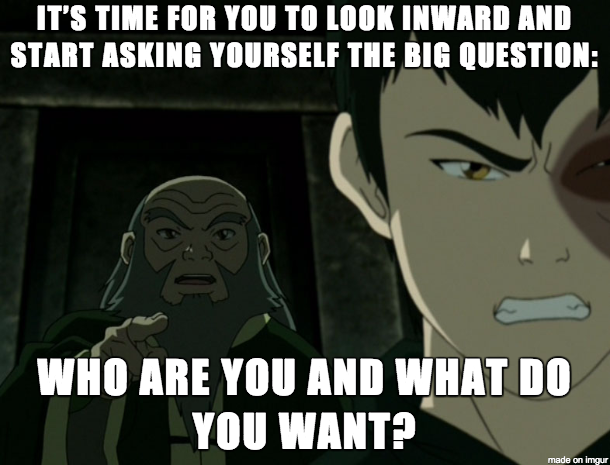
Learning to be comfortable with boredom is one of the most important things we can do. Through boredom we finally see ourselves clearly, becoming painfully aware of the meaninglessness and the emptiness we have avoided confronting. We can chase pleasure, novelty, and distraction as much as we want, but until we give ourselves the space to ask who we really are, what we truly want, and what our direction in life should be, we will never find peace.
 Austin Bai